Shooting a 30-second video ad used to mean booking a studio, hiring a crew, coordinating talent, and budgeting weeks of post-production.
That entire pipeline is collapsing.
Brands running lean marketing teams have figured out that an AI Video Ad Generator can handle most of that workload in a fraction of the time, and the quality gap is shrinking fast.
Here’s what’s actually driving the shift.
1. Production Timelines Dropped From Weeks to Hours
A traditional video ad campaign, even a simple one for Instagram Reels or YouTube pre-roll, typically takes two to four weeks from concept to final export.
Scripting, storyboarding, filming, editing, color grading, sound design.
Each step involves handoffs, revisions, and scheduling conflicts.
With an AI ad generator, that same deliverable can land in your project folder the same afternoon.
The AI handles script generation, scene composition, voiceover synthesis, and final rendering inside a single platform.
You’re not waiting on a freelance editor’s availability or a sound engineer’s turnaround.
Direct-to-consumer brands on paid social have started treating video ad creation the way they treat writing copy, something you iterate on daily, not quarterly.
2. Cost Per Asset Fell Off a Cliff
Producing a single polished video advertisement through traditional means costs anywhere from $1,500 to $50,000 depending on length, talent, and production value.
That’s per video.
If you’re A/B testing three hooks across four audience segments, you’re looking at twelve assets and a budget that makes most small teams flinch.
An AI ad generator changes the math entirely.
You can produce dozens of creative variations for the cost of one traditionally produced spot.
The output holds up on platforms where attention spans sit under three seconds anyway.
For performance marketers running paid social, volume and speed matter more than cinematic polish.
3. Creative Testing Became Continuous, Not Batched
This is the part most people underestimate.
Traditional production locks you into a small set of creatives per campaign cycle.
You shoot what you can afford, run those ads until they fatigue, then start the process over.
AI-generated video ads flip that model.
Because the marginal cost of producing another variation is near zero, teams can test constantly.
Swap the hook.
Change the background music.
Try a different call-to-action placement.
Adjust the pacing for a 6-second bumper versus a 15-second in-feed spot.
Ad algorithms reward creative diversity, so the more distinct ad variations you feed them, the faster delivery optimizes.
AI-powered ad generation tools make that kind of testing cadence realistic for teams without a dedicated video department.
4. Personalization Scaled Beyond What Studios Can Handle
Localizing a traditional video ad for five markets means re-shooting or re-editing five times.
Different languages, different cultural references, maybe different talent.
It’s expensive and slow, which is why most brands skip it entirely and run English-only creatives globally.
AI ad generators solve this with dynamic localization.
Voiceovers get synthesized in Portuguese, German, Japanese, whatever your target geo requires.
On-screen text adapts automatically.
Some platforms even adjust visual elements based on regional preferences.
A skincare brand running ads across Southeast Asia can now produce localized video creatives for each market without ever stepping into a recording booth.
That kind of personalization at scale was functionally impossible two years ago.
5. Platform-Native Formats No Longer Require Manual Reformatting
Every ad platform wants something slightly different.
YouTube wants 16:9 horizontal.
Reels need 9:16 vertical.
Feed ads perform best in 4:5.
Producing a single concept across all these aspect ratios traditionally means multiple edits, re-crops, and sometimes entirely different compositions.
Most AI video ad tools handle multi-format export natively.
You input your creative brief once, and the tool renders platform-specific versions automatically, adjusting framing, text placement, and safe zones for each output.
That alone saves hours per campaign launch.
6. The Talent and Licensing Bottleneck Disappeared
Hiring on-camera talent introduces contracts, usage rights, and renewal fees.
Stock footage helps, but it looks generic, and your competitors are probably using the same clips.
Either way, you’re dealing with licensing restrictions that limit where and how long you can run the ad.
AI-generated visuals sidestep most of this.
Synthetic presenters, AI-generated product demos, and motion graphics built from your brand kit don’t carry usage limitations.
You own the output.
There’s no talent release to expire, no footage license to renew.
For brands running always-on performance campaigns, that’s a meaningful operational advantage.
7. Iteration Speed Matches the Pace of Paid Media
Paid media moves fast.
A creative that converts well on Monday can fatigue by Thursday.
Algorithm changes or a shift in auction dynamics can tank performance overnight.
When your production cycle takes three weeks, you can’t respond to those shifts in real time.
An AI ad generator keeps your creative pipeline in sync with your media buying.
Spot a drop in click-through rate?
Generate five new hooks before lunch.
This responsiveness is why performance marketing teams, especially those managing significant monthly spend, are adopting AI video tools as core infrastructure, not optional extras.
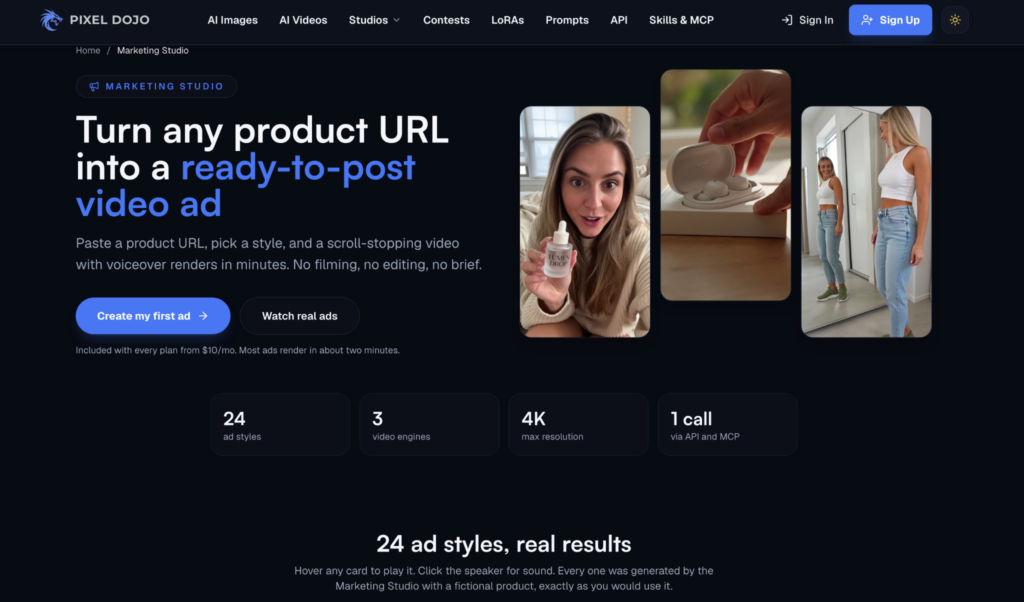
Platforms like Pixel Dojo have made this kind of rapid creative iteration accessible even to smaller teams without in-house video expertise.
8. Quality Reached “Good Enough” for Performance Channels
Two years ago, AI-generated video looked obviously artificial.
Janky motion, uncanny faces, weird lighting.
That’s changed considerably.
Current AI video tools produce output that’s visually competitive with mid-tier production houses.
Not Super Bowl commercial quality, but absolutely sufficient for the channels where most ad dollars actually flow.
Performance ads on social media don’t need to win awards.
They need to stop the scroll, communicate a value proposition, and drive a click.
For that job, AI-generated video is already good enough, and improving every quarter as the underlying generative models get better at realistic motion, lighting consistency, and scene coherence.
The Bottom Line
Traditional video production isn’t dead.
Brand films, hero content, and premium storytelling still benefit from human crews and real sets.
But for the bulk of digital advertising, the dozens or hundreds of video creatives that fuel paid social and programmatic campaigns, AI ad generators have become the faster, cheaper, and more scalable option.
The teams that figured this out early are already outpacing competitors still waiting on edit bay schedules.